
- Phoenix
- Urbanism: Integral, Good, and Regenerative
- Architecture of Fear
- Urban Design & HEALth
- Ethnography
- Dallas Fort Worth (DFW)
- Salt Lake City (SLC)
- Interviews
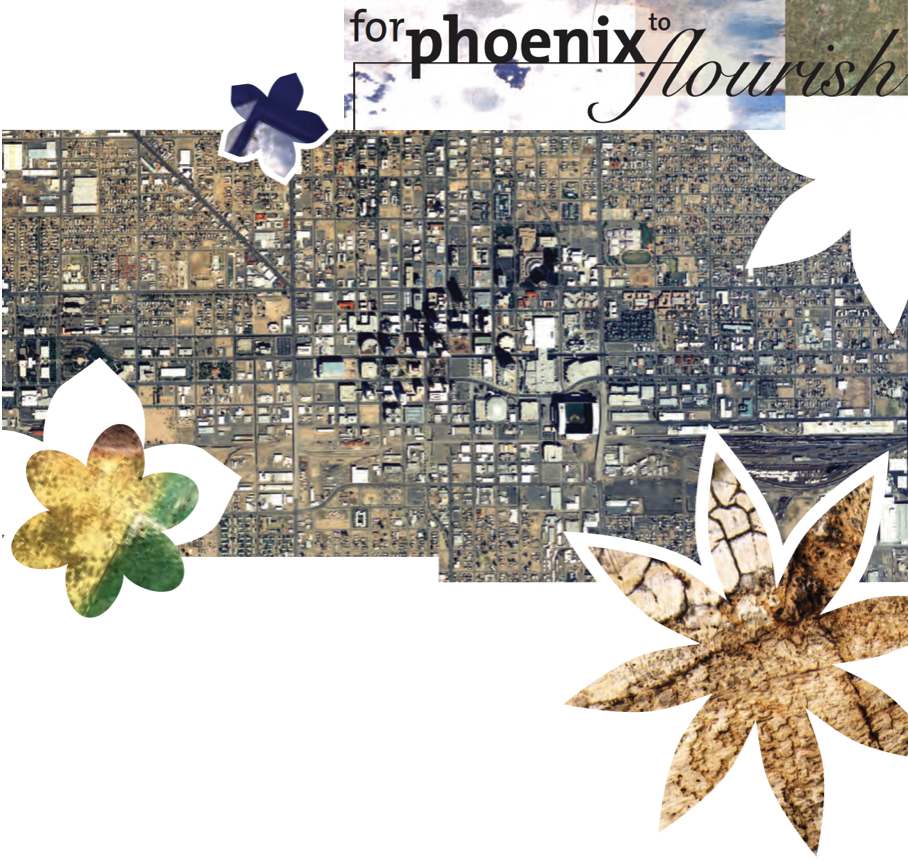
For Phoenix to Flourish: Special issue of Shade Magazine, featuring proposals for downtown Phoenix revitalization developed by Ellin with other ASU faculty and students, October/November 2004.
Canalscape – Visit Here
Arizona Republic
“Make People Want to Come Back to Cities,” Arizona Republic, September 5, 2007.
“‘Authenti-City’ Creates Urban Fabric Organically,” Arizona Republic, August 3, 2007.
“Architectural Scene Grows from Desert,” Arizona Republic, July 27, 2007.
“Now is Time for Phoenix to Plan Downtown of Future,” Arizona Republic, June 27, 2007.
“Put Nature Back in Our Downtown,” Arizona Republic, June 7, 2005, B7.
“The Time is Ripe for Phoenix,” Arizona Republic, February 15, 2005, B7.
“Add Pizazz to Vision for Downtown,” Arizona Republic, December 16, 2004, B7.
Shade Magazine
“Tipping Point,” Shade Magazine, October-November 2004, 56-7.
“Urban Instinct: Sustainable Phoenix,” Shade Magazine, Oct-Nov 2004, 93-4.
“Art Infusion” and “Neighborhood Swim/Fitness Clubs,” Shade Magazine, Oct-Nov 2004, 72-4.
“Authenti-City,” Shade Magazine, June 2004, 36-9.
“Livable Phoenix,” Shade Magazine, February 2004, 42-3.
“Urban Design for the Third Millenium,” Shade Magazine, December 2003, 22-3.
“A Translucent Urbanism,” Shade Magazine, August 2003, 34-6.
“The Future of Multi-Use,” Shade Magazine, November-December 2002, 54-7.
“Soul of the City,” Shade Magazine, July 2002, 38-40.
“Shade Sutures: Retrofitting Our Desert City,” Shade Magazine, with Jeffrey Cook, Dan Hoffman, Harvey Bryan, Darren Petrucci, Vidar Lerum and Ron McCoy, June 2002, 32-7.
Other
“Desert Urbanism,” Design with the Desert, Richard Malloy, et al. (eds.), Tucson: University of Arizona Press, 2013, 427-38.
“Recycling the City: Darning Downtown Phoenix,” with Kelly Turner, Critical Planning, v17, Summer 2010, 155-73.
“High Profile Arizona Special Feature: Urban Instinct,” High Profile, Winter 2005, 21, 23.
“A Blueprint for Survival of Metro Phoenix,” Arizona Capitol Times, June 13, 2003.
To achieve good urbanism, we:
Value the unique spark of each person, profession and place.
Work on real projects that make a real difference.
Focus on the big picture as well as the detail.
Embrace poetry as well as pragmatism.
Aspire to elegance as well as efficiency.
Draw from intellect and intuition.
Are on site and online.
Bring humility, humor, and humanity to our work.
Regard the city as our campus as well as our canvas.
Celebrate modern, vernacular, humanist, social scientific,
technological, and ecological traditions/approaches.
And ignite evolution that enriches places for people and the planet.
“Regenerative Urbanism: Enriching Places for People and the Planet,” on the United Nation’s Sustainable Development Goal 11: Sustainable Cities and Communities, Denning Law Journal, January 2025.
“The New Design with Nature,” Ecologies Design: Transforming Architecture, Landscape and Urbanism, edited by Maibritt Pedersen Zari, Peter Connolly, and Mark Southcombe, 2020. View here.
“Restorative Urbanism: Beyond Sustainability to Prosperity,” Sustainable Urbanism & Beyond: Rethinking Cities for the Future, Tigran Haas (ed.), Rizzoli, 2012. “Urbanismo Restaurativo: De la Sostenibilidad a la Prosperidad,” Instituto Mexicano de Urbanismo, traducido par Gilda Plazas, 2012.
“Restorative Urbanism: Beyond Sustainability to Prosperity,” Environment & Landscape – Architecture of Korea Magazine, December 2010, 142-9 (in Korean).
“What is Good Urbanism?” Emergent Urbanism: Urban Planning & Design in Times of Systemic and Structural Change, Haas, T. and Olsson, K. (eds.). Ashgate: Burlington, October 2014.
“Integral Urbanism: A Context for Urban Design,” Resilience in Urban Ecology and Design: Linking Theory and Practice for Sustainable Cities, Steward Pickett, Mary Cadenasso, and Brian McGrath (eds.), Springer Future Cities Series, 2013, 63-78.
“Urbanism – New, Landscape, or Otherwise: The Case for Complementarity,” Landscape Urbanism and Its Discontents: Dissimulating the Sustainable City, edited by Andres Duany and Emily Talen, 2013, 273-85.
“What is Good Urbanism?,” Journal of Architecture and Urbanism, Issue 4, 2013.
“Don’t Go Vertical; Go Programmatic,” in Zocalo Public Square, May 1, 2012.
“Urban Desiderata,” Journal of Urbanism, v 5 no 1, March 2012, 87-92.
“Architecture of Love,” Museum of Fearology, Michael Fisher, curator, September 2012.
“The City in Flow: Integral Urbanism for a New Era,” Changing Metropolis II, Marie Viltoft Polli (ed.), Copenhagen: Kobenhavns Internationale Theatre, 2012, 22-28.
“The Integral City,” Changing Metropolis 2, for the Copenhagen Biennale, June 2010.
“The Tao of Urbanism,” What We See: Advancing the Investigations of Jane Jacobs: Contemporary Thinkers Observe Our World, Stephen Goldsmith and Lynne Elizabeth, (eds.), New Village Press, 2010, 44-54.
“Urbanistico” or “Shifting Ground: Integral Urbanism for a New Era,” Il Dolce Avvenire: Esercizi di immaginazione radicale del presente, (The Sweet Hereafter: Exercises in radical imagination of the present time), A. Bosi, M. Deriu, V. Pellegrino (eds.), Edizioni Diabasis, 2009, 304-11.
“Erasmian Urbanism vis-à-vis Integral Urbanism,” Erasmian Urbanism 4, Maarten Struijs (ed.), Rotterdam: Rotterdam University, 2007.
“Themes of Postmodern Urbanism,” The Urban Design Reader, Michael Angelo Larice and Elizabeth MacDonald (eds.), New York: Routledge, 2007, 206-14.
“A Vulnerable Urbanism,” Re-envisioning Landscape/Architecture, Catherine Spellman (ed.), Barcelona: ACTAR, 2001, 222-35.
“Slash City,” Lotus International, no.110, Theme issue on “Global Cities, Planning, Disturbances, Architecture, Infrastructures,” September 2001, 58-72.
“Fear and City Planning,” Hedgehog Review: Critical Reflections on Contemporary Culture, Institute for Advanced Studies in Culture, University of Virginia, 2004, 43-61.
“New York 9/11: An Attack on Urban Culture?,” Urban Ecology, Winter 2001-2, 16-18.
“Thresholds of Fear: Embracing the Urban Shadow,” Urban Studies Review, 2001 38/5-6: 869-83.
“Through the Lens of Fear,” The Safe City (Den trygge Byen kriminalitetsforebygende), Tina Skouen (ed.), Oslo, Denmark: Norsk Form, 1999.
“Our Cities, Ourselves,” Journal of Comparative Law and Urban Policy, 5:1 (2022), Special Issue: Agenda for Building a Changing World Responsibly: Commentaries and Reflections by Leaders in Urban Planning, Policy, and Design, 539-556.
“Your City Yourself,” Imperfect Health: The Medicalization of Architecture, Canadian Centre for Architecture, tr. into French: “Votre Ville Votre Miroir,” Lars Müller Publishers, 2012.
“This book at its best is illustrated by urban planner Nan Ellin’s contribution, ‘Your City Yourself,’ her title a wry play on the self-care health workbooks spawned by American feminists decades ago. Ellin writes:
‘Over the last decade, great strides have been made toward understanding habitat hazards by environmentalists, physicians, community and public health experts, social workers, psychologists and urban planners. Nonetheless, PDD (Place-Deficit Disorder) is not being addressed as consistently, expeditiously and thoroughly as it could and should. Why not? … Today, a plethora of urban prescriptions and self-help books promise to heal what ails us, rarely recognizing the obvious, yet oddly overlooked inextricability of people and place.’” – Norman Weinstein, ArchNewsNow review, May 4, 2012
“Life Support: Nacirema Redux,” Journal of Urbanism: International Journal of Placemaking and Urban Sustainability, March 2008, 47-55.
“At Home Everywhere and Nowhere: Making Place in the Global Village,” Culture, Environmental Action, and Sustainability, Garcia Mira, Sabucedo Cameselle, Martínez (eds.), Germany: Hogrefe & Huber, 2003, 61-8.
“At Home Everywhere and Nowhere: Prospects for Making Place in the Global Village,” Thresholds, #20, MIT, 2001, 42-9.
“Urbanization, Society & Culture,” Design Professionals and the Built Environment, Paul L. Knox and Peter Ozolins (eds.), John Wiley Ltd., 2000, 99-106.
“Participatory Architecture on the Parisian Periphery,” Journal of Architectural Education, issue on “Beyond Expert Culture,” February 2000, 178-83.
“Shifting Metaphors for City and Culture: Ecology and the Border,” City & Culture. Louise Nystrom (ed.), Stockholm: Swedish Urban Environment Council, 1999, 12-22.
“Constructing the Middle Class: A Review Essay” on Culture Builders by Jonas Frykman and Orvar Lofgren, History of European Ideas 13(6), 1991, 817-824.
“How DFW Could Go from a Bunch of Strong Cities to a Regional Powerhouse,” Dallas Morning News, Sunday Points, February 26, 2017.
“Trinity River could be a Game-Changer for North Texas,” Fort Worth Star Telegram, February 10, 2017.
“Fair Park Could Become a Vibrant Part of the City, but How Do We Pay for It?,” with Michelle Corson, Dallas Morning News, January 16, 2017.
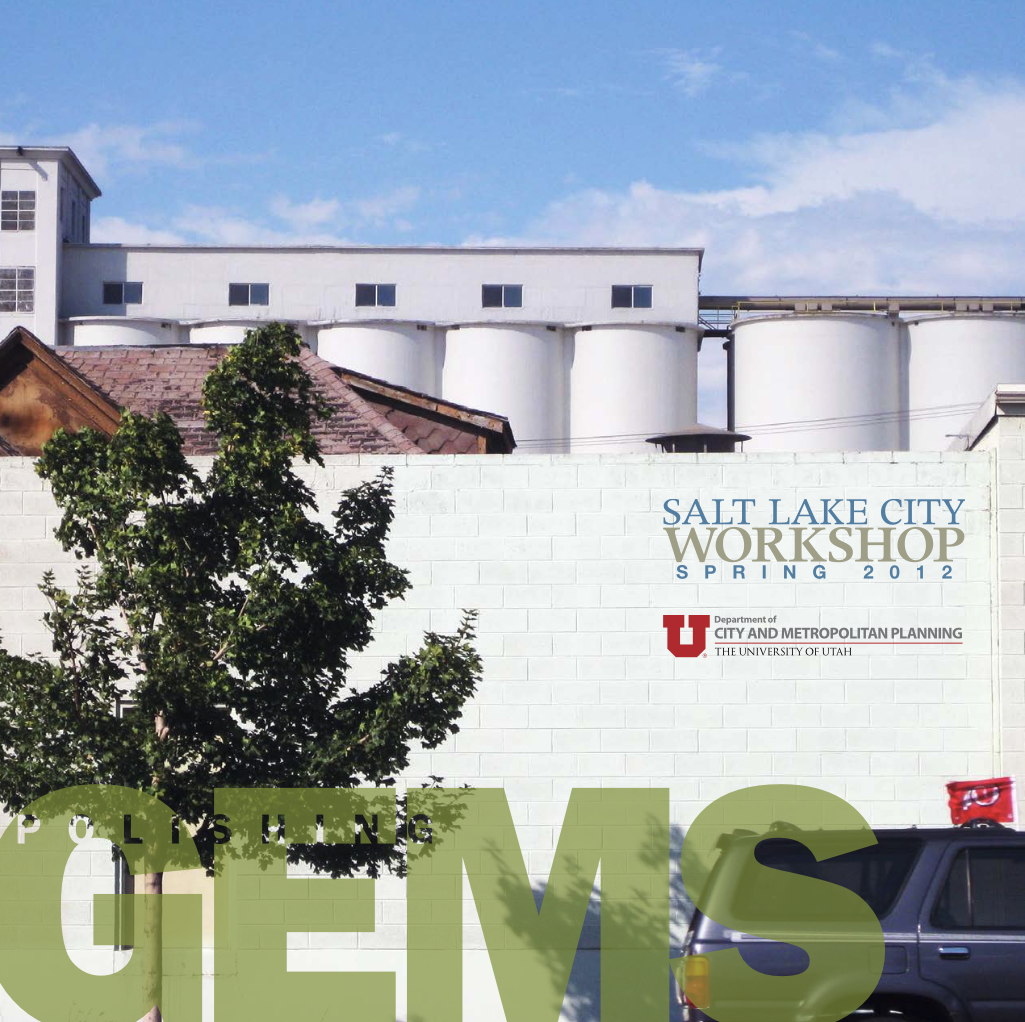
Polishing Gems: Prospects for the Granary District. Ellin with Students, SLC: University of Utah, 2012.
“Op-ed: Thanks, Utah,” Salt Lake Tribu Tribune, January 31, 2015.
“Planning @ University of Utah,” Utah Planner, July 2014.
“Raise the Granary,” Architecture and Design SLC – 15 Bytes: Utah’s Art Magazine, June 2012.
“University of Utah’s Department of City and Metropolitan Planning,” Utah Planner, October 2011.
“Farewell to Conventional Urbanism? A Conversation with Nan Ellin,” Rethinking Modernism and the Built Environment, Alamantas Samalavicius (ed.), UK: Cambridge Scholars Publishing, 2017.
Interview, Columns Magazine: Winter 2016. [see https://issuu.com/aiadallas/docs/columns_winter_2016 or visit this link]
“Interview with Nan Ellin” by Alamantas Samalavicius, Forms of Captivity: Talks on Economics, Urbanism and Crisis. “Urbanistika, Padedanti Iveikti Baime,” Nelaisves formos, English/Lithuanian, 193-202, 2014.
Interviewed by Kylan Rice about tactical and good urbanism, BYU Radio, aired August 12, 2013, 20 minutes.
“Urbanistika, Padedanti Iveikti Baime,” Vilnius: Kulturos Barai, Interviewed by Alamantas Samalavicius, March 2013, 2-6. (Also appeared in Lithuania’s largest online daily www.delfi.lt and Europe’s forum of cultural journals www.eurozine.com.)
Interviewed by Charlene Spretnak about Good Urbanism, PRN.FM, 40-minutes, February 28, 2013.
Interviewed by Jennifer Napier-Pearce about Good Urbanism, KCPW, 40-minutes, December 18, 2012.
Interviewed by Mike Lynch about SLC Workshop, KRCL, aired December 15–27, 2012.
“Interview with Nan Ellin by Jin-Oh Kim,” Environment & Landscape – Architecture of Korea Magazine, December 2010, 172-5.
“Nan Ellin: A Phoenix Visionary,” Interviewed by Effie Bouras, Java, May 2007, 26-8.
“Eye Slashes,” Interviewed by David Tyda, Desert Living Design Issue, March 2007, 24.
Interviewed for Phoenix series, National Public Radio, aired February 2006.
Interviewed by bizAZ, Michael Miklovsky, September/October 2003.
“Si la ciudad fuese perfecta, no seria humana y aburriria” (“If the City Were Perfect, it Wouldn’t be Human and We Would be Bored”), interview in La Voz de A Coruña, July 25, 2002.
Interviewed by Jane Lefaivre, Austrian Broadcasting Corporation, “Panic Room,” Vienna, April 8, 2002.
“Interview: Nan Ellin,” Alex Bitterman, Intersight, #6, SUNY Buffalo, 2001, 104-12.
Interviewed for “Culture of Fear” with other authors from Architecture of Fear (Blakely and Turnbull), Australian Broadcasting Corporation, Arts Today, 25 minutes, August 30, 1999.
Interviewed by Charles Jencks, “Jencks’s Jumping Universe,” BBC, March 27, 1997.
Interviewed by BBC, “Architecture of Exclusion,” The Afternoon Shift with Maxwell Hutchinson and Jeremy Melvin, 30 minutes (live), March 25, 1998.
Interviewed by Australian Broadcasting Corporation, “Architecture of Fear,” Comfort Zone, 30 minutes, April 26, 1997.